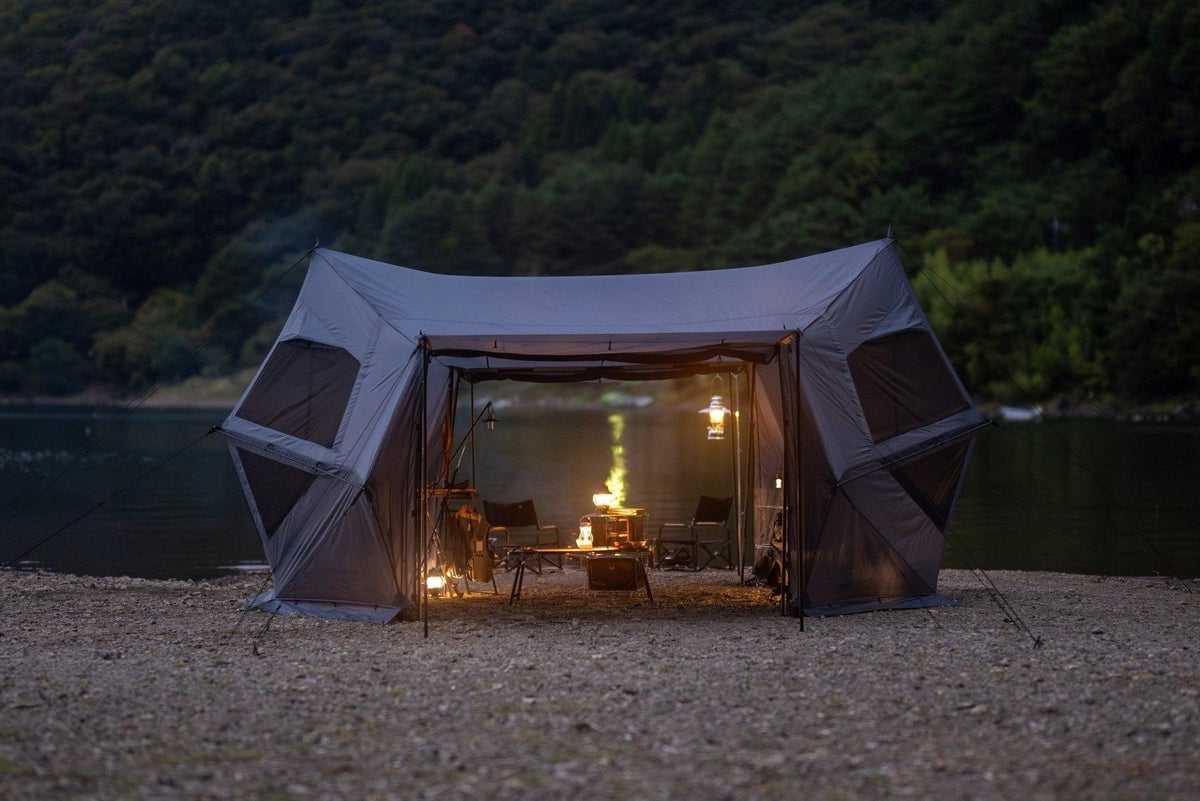
Popular Items in Winter sleeping bag

 ポイント10%
 ポイント15%
 ポイント10%ポイント15%
 ポイント10%ポイント15%
 ポイント10%ポイント15%
Winter sleeping bag
ポイント10%ポイント15% ポイント10%ポイント15%
[Winter Camping Sleeping Bags] How to Choose, Care for Them, and Tips for a Comfortable Night’s Sleep!
Using a "winter sleeping bag" for winter camping ensures you can sleep warm without freezing in the cold.
However, with so many winter sleeping bags available in various shapes and with different types of insulation, you might find it hard to choose. Some of you might even wonder, “Do I really need a sleeping bag specifically designed for winter?”
So, in this article, we’ll cover the following details about winter sleeping bags:
- Necessity
- How to Choose
- Care Instructions
- Tips for a Comfortable Night’s Sleep
We’ll also take a closer look at TOKYO CRAFTS’ sleeping gear, which we highly recommend for winter camping. If you want to stay warm and sleep soundly even during winter camping, please use this guide as a reference.
Is a Winter Sleeping Bag Really Necessary?
Not only in the dead of winter, but also during chilly seasons like early spring and late fall, the cold from the ground can seep through while you sleep, making it difficult to get a good night’s rest. Even if you can get by without heating during the day, using a winter sleeping bag will ensure you stay warm and comfortable at night when temperatures drop.
By the way, is a winter sleeping bag absolutely necessary for winter camping?
In reality, as long as it’s not freezing cold, you can camp without a winter sleeping bag. However, if you use your regular sleeping bag, you’ll need to take steps to improve its insulation.
Some strategies include using an “electricity-equipped campsite” or a “portable power source” to run an electric blanket or heated mat, adding a “blanket” or “hot water bottle” inside your sleeping bag, or wearing “down jackets” and “down pants” to bed.
However, these measures come with drawbacks, such as increased luggage and feeling stuffy from wearing so many layers...
On the other hand, winter sleeping bags offer exceptional insulation, allowing you to sleep comfortably even in light clothing like fleece or sweatpants without needing additional items.
If you enjoy winter camping frequently, this is an item we highly recommend.
How to Choose a Winter Sleeping Bag
Here, we’ll explain how to choose a winter sleeping bag.
Tip 1: Prioritize Insulation
The most important factor in a winter sleeping bag is "insulation." The key indicators of insulation performance are the "comfort temperature" and the "limit temperature."
The "comfort temperature" indicates the lowest temperature at which you can sleep warmly and comfortably. For example, if a sleeping bag has a comfort temperature of -10°C, you can sleep comfortably as long as the air temperature is 10°C or higher.
The other standard, the “Limit Temperature,” indicates the lowest temperature at which you can still sleep, albeit feeling the cold. For example, if the limit temperature is -20°C, you can manage to sleep at temperatures of -20°C or higher, even if you have to endure the cold.
Since sleeping comfortably is essential for winter camping, it’s best to use the “Comfort Temperature” as your guideline. However, for those who tend to feel the cold easily—such as women—it’s safer to use a temperature that’s 5°C higher than the Comfort Temperature as your guideline.
How to Choose #2: We Recommend the "Mummy-Style" for Superior Insulation
Sleeping bags are divided into two types based on their shape: "mummy-style" and "envelope-style."
The term “mummy” refers to a mummy, and as the name suggests, it is shaped like a human figure.
Its appeal lies in its high thermal insulation due to the shape that fits snugly around the body. Additionally, since it uses less fabric than the envelope-style, it is lightweight, packs down compactly, and is highly portable.
Mummy-style sleeping bags are recommended for winter camping, but they are especially ideal for backpacking and tent camping during mountain hikes.
Rectangular sleeping bags, resembling an envelope, are classified as "envelope-style." While they don’t offer the snug fit of a mummy-style bag, they provide more room and a sleeping experience similar to that of a futon. Furthermore, by opening the zippers on the sides and at the foot, they can be used as a single futon.
Because envelope-style sleeping bags use more fabric, they are heavier than mummy-style ones and have a slightly larger packed size.
How to Choose #3: Two Types of Insulation
Winter sleeping bag fill materials are divided into "down" and "synthetic fibers." Each has its own advantages and disadvantages, so choose the one that best suits your camping style and budget.
-"Down" is recommended for winter use
The biggest appeal of "down" is, without a doubt, its excellent insulation. It allows you to sleep warmly even in the harsh cold of winter camping.
Additionally, down insulation provides sufficient warmth with less material than synthetic fiber. As a result, down-filled sleeping bags are extremely lightweight, pack down to a small size, and are highly portable.
Another advantage of down is that, with proper care, it holds up better than synthetic fibers and resists flattening. Since its insulation lasts longer, you can use it for many years after purchase.
However, care must be taken because down takes a long time to dry once wet. If it gets wet from condensation or other sources, its insulation drops rapidly, so be careful to keep it dry.
When cleaning, you must hand-wash it gently and allow ample time for the down to dry completely. Compared to synthetic fibers, this requires more effort and time. The price is also significantly higher than that of synthetic fibers.
-If ease of care is your priority, choose “synthetic fiber”
The biggest advantage of sleeping bags filled with synthetic fiber is, without a doubt, their affordability. This is especially welcome for family camping trips where you need sleeping bags for everyone.
They are also easy to wash in a washing machine and dry quickly, so maintenance is quick and hassle-free.
However, they are inferior to down in terms of insulation. While they are perfectly adequate for winter camping in warm locations, they are not suitable for use in mountainous or cold areas. Another drawback is that they are considerably heavier than down and have a larger packed size.
Tip #4: You Can’t Go Wrong with High-Spec Gear for Winter Camping! Check the Features Too
During winter camping, cold seeps up from the ground, and you might find yourself unable to sleep all night due to the chill. Therefore, cold-weather protection is especially important.
In winter camping, you’ll rarely find a sleeping bag too warm. If the cold keeps you awake, it will affect your physical condition the next day and cut your camping enjoyment in half. As long as your budget allows, you won’t regret choosing a product with the highest possible insulation rating.
How to Care for Your Sleeping Bag
If dirt, such as body oils, accumulates on a sleeping bag, the filling loses its loft and can no longer retain warm air, resulting in reduced insulation. If the entire bag is dirty or you notice a drop in warmth, it needs to be washed with water to remove the dirt.
The cleaning method differs depending on whether the filling is “down” or “synthetic fiber,” so be sure to use the appropriate method for each.
Down
For down sleeping bags, you must use a “down-specific detergent” to prevent damage to the feathers.
When washing with detergent, do not use a washing machine, as this can damage the feathers. Fill a bathtub or basin with lukewarm water, add the specialized detergent, and gently press the fabric with your hands or feet to remove dirt. Rinse in the same manner. Press with your hands or feet while changing the water until the water runs clear, rinsing thoroughly.
Spinning in a washing machine is also not recommended, as it damages the down. First, gently squeeze out excess water by hand, then sandwich the sleeping bag between dry bath towels and press to remove moisture.
You can use a "dryer" for drying. However, since completely drying the item can damage the fabric and down, limit use to a low temperature and a short duration.
Down takes longer to dry than synthetic fibers. To ensure it is completely dry, after using the dryer, spread it out in a well-ventilated, shaded area and air-dry it for about a week. If you do not have a dryer, allow even more time for air-drying.
Synthetic Fibers
Sleeping bags with synthetic fiber filling can be washed in a washing machine. You can use your usual mild detergent.
Tumble drying is also possible, but since they dry quickly, they will be dry in about a day even if you just air-dry them in the shade after spinning.
Storage
If you leave your sleeping bag in the included storage bag for extended periods, it may become compressed, potentially reducing the filling’s “resilience.” Additionally, since most storage bags are made of polyester, they lack breathability and may lead to mold growth.
When storing the sleeping bag, we recommend using a large, breathable storage bag instead of the included storage bag.
Also, choose a storage location with low humidity and good ventilation to prevent mold growth.
Tips for Sleeping Comfortably During Winter Camping
Winter sleeping bags are designed to keep you comfortable during winter camping, but with a few extra tips, you can sleep even warmer and more comfortably.
Tip 1: Use a sleeping pad to prevent cold from the ground
A "sleeping pad" is useful for reducing the feeling of the ground even during summer camping. For winter camping, choosing one with a focus on insulation will help create an environment where you can sleep even more soundly.
The R-value is the standard for measuring a mat’s insulation. R-values range from 1 to 10, with higher numbers indicating better insulation. A mat with an R-value of 4 or higher will effectively block the cold coming from the ground, even during winter camping.
Tip 2: Boost insulation with a sleeping bag liner
For winter camping, we also recommend using a "sleeping bag liner" to improve insulation.
Additionally, because the temperature difference between inside the tent and the outside air is significant in winter, condensation tends to form easily inside the tent. If condensation forms during the night, water may drip and wet your sleeping bag.
Down, in particular, takes a long time to dry once wet and loses almost all of its insulation. Using a sleeping bag cover that offers both excellent insulation and high water resistance will effectively prevent your down from getting wet.
TOKYO CRAFTS Sleeping Gear
Here, we’ll introduce TOKYO CRAFTS’ recommended sleeping gear for winter camping.
TOKYO CRAFTS × NANGA “Aurora Square Foot 750”
The “Aurora Square Foot 750” is a collaborative product with the popular down manufacturer “NANGA.” It uses NANGA’s proprietary “Aurora Tex®” material, which offers high water resistance and breathability, so you don’t have to worry about the down filling getting wet from condensation or rain leaks.
It features 700-fill power down for excellent insulation. With a comfort temperature of -6°C and a limit temperature of -14°C, you can use it with confidence even during winter camping.
The design is a unique style that combines a mummy shape with an envelope shape, featuring a square foot area. It provides a cozy, enveloping warmth and a relaxed feel around the feet.
UT Cot
To create a warm sleeping environment, it’s essential to minimize the transfer of cold from the ground—the primary cause of cold while sleeping. Using a cot elevates you off the ground, reducing the transfer of cold.
The "UT Cot" can be used in two ways: high or low. In the high setting, the distance from the ground increases, further reducing the transfer of cold. The firm tension ensures your hips don’t sink in, providing a comfortable sleeping experience.
Weighing just 2.6 kg, it’s extremely lightweight and comes with a shoulder-carry storage bag, making it highly portable. The storage bag can be used as a pillow when filled with clothes, or hung on the side to hold small items like a smartphone.
Choose a winter sleeping bag with insulation as your top priority!
If you want to sleep warm during winter camping, we recommend using a winter sleeping bag. With a winter sleeping bag, you can relax and sleep comfortably in just your pajamas without needing any additional gear.
By following the selection tips introduced here, you’re sure to find a winter sleeping bag that suits your camping style.
Be sure to get a warm, restful night’s sleep in your winter sleeping bag and enjoy winter camping to the fullest!
RANKING
ランキング一覧へ ポイント10%ポイント15%
ポイント10%ポイント15%
ポイント10%ポイント15% ポイント10%ポイント15%
 ポイント10%ポイント15%
ポイント10%ポイント15%
ポイント10%ポイント15% ポイント10%ポイント15%
 ポイント10%ポイント15%
 ポイント10%ポイント15%
ポイント10%ポイント15%
ポイント10%ポイント15%


 ポイント10%ポイント15%
 ポイント10%ポイント15%
 ポイント10%ポイント15%
 ポイント10%ポイント15%
 ポイント10%ポイント15%
 ポイント10%ポイント15%
ポイント10%ポイント15%
ポイント10%ポイント15%
ポイント10%ポイント15%
ポイント10%ポイント15%
ポイント10%ポイント15%
ポイント10%ポイント15% ポイント10%ポイント15%
 ポイント10%ポイント15%
 ポイント10%ポイント15%
 ポイント10%ポイント15%
ポイント10%ポイント15%
ポイント10%ポイント15% ポイント10%ポイント15%
 ポイント10%ポイント15%
ポイント10%ポイント15%
ポイント10%ポイント15%
ポイント10%ポイント15%
ポイント10%ポイント15%
 ポイント10%ポイント15%
 ポイント10%ポイント15%
ポイント10%ポイント15%
ポイント10%ポイント15% ポイント10%ポイント15%
 ポイント10%ポイント15%
 ポイント10%ポイント15%
ポイント10%ポイント15%
ポイント10%ポイント15%
 ポイント10%ポイント15%
 ポイント10%ポイント15%
 ポイント10%ポイント15%
 ポイント10%ポイント15%
 ポイント10%ポイント15%
 ポイント10%ポイント15%
SEE MORE (その他オススメ商品)
ポイント10%ポイント15% ポイント10%ポイント15%
 ポイント10%ポイント15%