Popular Items in Lightweight Tent

 ポイント10%
 ポイント15%
 ポイント10%ポイント15%
 ポイント10%ポイント15%
 ポイント10%ポイント15%
 ポイント10%ポイント15%
Lightweight Tent
 ポイント10%ポイント15%
 ポイント10%ポイント15%
ポイント10%ポイント15%
ポイント10%ポイント15% ポイント10%ポイント15%
 ポイント10%ポイント15%
 ポイント10%ポイント15%
ポイント10%ポイント15%
ポイント10%ポイント15% ポイント10%ポイント15%
 ポイント10%ポイント15%
 ポイント10%ポイント15%
 ポイント10%ポイント15%
 ポイント10%ポイント15%
 ポイント10%ポイント15%
 ポイント10%ポイント15%
 ポイント10%ポイント15%
 ポイント10%ポイント15%
 ポイント10%ポイント15%
ポイント10%ポイント15%
ポイント10%ポイント15% ポイント10%ポイント15%
 ポイント10%ポイント15%
 ポイント10%ポイント15%
 ポイント10%ポイント15%
 ポイント10%ポイント15%
 ポイント10%ポイント15%
 ポイント10%ポイント15%
 ポイント10%ポイント15%
 ポイント10%ポイント15%
 ポイント10%ポイント15%

 ポイント10%ポイント15%
 ポイント10%ポイント15%
 ポイント10%ポイント15%
 ポイント10%ポイント15%
 ポイント10%ポイント15%
 ポイント10%ポイント15%
 ポイント10%ポイント15%
 ポイント10%ポイント15%
 ポイント10%ポイント15%
 ポイント10%ポイント15%
 ポイント10%ポイント15%
 ポイント10%ポイント15%
 ポイント10%ポイント15%
 ポイント10%ポイント15%
 ポイント10%ポイント15%
 ポイント10%ポイント15%
 ポイント10%ポイント15%
 ポイント10%ポイント15%
 ポイント10%ポイント15%
 ポイント10%ポイント15%
 ポイント10%ポイント15%
 ポイント10%ポイント15%
 ポイント10%ポイント15%
 ポイント10%ポイント15%
 ポイント10%ポイント15%
 ポイント10%ポイント15%
 ポイント10%ポイント15%
 ポイント10%ポイント15%
ポイント10%ポイント15%
ポイント10%ポイント15% ポイント10%ポイント15%
 ポイント10%ポイント15%
 ポイント10%ポイント15%
 ポイント10%ポイント15%
 ポイント10%ポイント15%
 ポイント10%ポイント15%
 ポイント10%ポイント15%
 ポイント10%ポイント15%
 ポイント10%ポイント15%
 ポイント10%ポイント15%
 ポイント10%ポイント15%
What Are the Benefits of Lightweight Tents? How to Choose and Recommended Products
The Benefits of Lightweight Tents
Lightweight tents are designed with a particular emphasis on "lightness." They were originally developed for mountaineers who camp in tents while hiking in harsh environments.
Depending on the manufacturer and product, most weigh under 1 kg, and they prioritize not only lightness but also durability and water resistance.
Recently, models have expanded beyond just advanced users like mountaineers and experienced outdoor enthusiasts to include options for the general public, such as solo travelers, groups, and families.
With the growing number of lightweight tent users, many outdoor gear manufacturers now offer a wide variety of lightweight tents.
So, for those looking for a lightweight tent, we’ll introduce the benefits of lightweight tents, key selection tips, and recommended products.
Please use this guide to find the lightweight tent that perfectly matches your needs.
Benefit 1: Easy to Carry
Lightweight tents are designed with a specific user in mind: solo campers who want to keep their gear as light as possible; touring campers who travel by motorcycle or bicycle; hikers embarking on long-distance treks; and campers—such as those focused on fishing—who carry a lot of other gear.
As a result, they are characterized by a design that minimizes weight and allows the tent to be packed down compactly when not in use. Because they are lightweight and compact, they are easy to carry and store.
Advantage 2: Many are relatively easy to set up
When solo camping or hiking, it’s frustrating to finally arrive at your destination after carrying heavy gear only to find that setting up the tent takes a long time.
Also, since you might have to set up and take down the tent in the evening when it’s dark, tents with complex structures can be difficult to handle.
Depending on the manufacturer, lightweight tents often have fewer parts, such as poles, and many models are designed to be set up relatively easily.
Advantage 3: Resistant to wind and rain
Manufacturers offer a wide variety of lightweight tents, ranging from those designed for serious backpacking trips to more casual options suitable for picnics and day camps.
However, lightweight tents are fundamentally designed with serious mountaineering and touring in mind.
Many models use high-water-pressure-resistant nylon materials and feature wind-resistant structures that won’t be blown away even in strong winds.
How to Choose a Lightweight Tent
When choosing a lightweight tent, consider not only its weight but also the materials used, optimal size, structure, and features.
How to Choose #1: Materials Used in Lightweight Tents
While various materials are used for camping tents, lightweight tents designed for mountaineering typically use lightweight polyester or nylon.
-Polyester
Polyester is a fabric woven from threads made of a resin called "polyethylene terephthalate (PET)" and is the most standard material used.
Compared to other tent materials, it has the following characteristics:
- Resistant to UV rays and less prone to deterioration
- Low water absorption; does not easily soak up water
- Dries quickly
- Resistant to mold
- Weight remains relatively unchanged even when wet
- Lightweight
- Relatively affordable
However, it is vulnerable to fire and heat, and sparks from a campfire can burn holes in the tent, so avoid setting up a campfire right next to it.
-Nylon
Nylon is even lighter and more flexible than polyester. It is a material often used in lightweight mountaineering tents and tent liners.
The characteristics of nylon are as follows:
- High tensile strength and durability
- Resistant to scratches and tearing
- High water resistance
- Dries quickly even when wet
However, because of its high durability and water resistance, it is also more expensive. Also, please handle with care as it is extremely vulnerable to high heat.
How to Choose #2: Select a size for the number of users plus one
With solo tents, a "1-person" model often feels cramped once you place your gear inside.
If you want to relax inside the tent, it’s best to choose a size that accommodates “the number of users plus one.” (Example: For two people, choose a 3–4 person tent.)
However, the larger the tent, the heavier it becomes. You’ll need to consider how much weight you’re willing to carry when making your choice.
How to Choose #3: Decide Between "Single-Wall" and "Double-Wall"
There are two types of lightweight tent structures: single-wall and double-wall.
As the name suggests, a single-wall tent consists of a single layer of fabric.
Because there is only one layer of fabric, setup is quick and easy, and the tent is lightweight. It’s also easy to take down and packs down compactly.
However, since there is only a single layer of fabric separating the cold outside air from the warm inside air, a disadvantage is that condensation is likely to form inside if you don’t pay attention to ventilation.
In contrast to single-wall tents, double-wall tents consist of “two walls.”
It features a double-layered structure where a waterproof sheet is placed over a single-wall tent. The advantage is that having two layers makes it resistant to rain and wind and reduces the likelihood of condensation.
If you set it up to create a space between the inner and outer layers, you can create a place to store items like shoes and backpacks that you don’t want inside the tent. However, the downside is that having two layers of fabric increases the weight.
Tip 4: Check Water Resistance and Breathability
When choosing a lightweight tent, be sure to check not only the weight but also the water resistance and breathability.
Check the “water resistance rating” listed in the product specifications. Unless you’re planning a serious mountaineering trip, products with a water resistance rating of around 1,500 mm to 2,000 mm are generally recommended.
The higher the water resistance, the poorer the breathability tends to be.
- Ventilation
- Windows and doors that can be converted to mesh
- A skirt at the bottom of the tent that allows for airflow adjustment
Check to see if the tent features ventilation features such as these.
TOKYO CRAFTS Tent Lineup
TOKYO CRAFTS, an original camping gear brand
TOKYO CRAFTS is an original camping gear brand.
Here are some of the brand’s most popular tents.
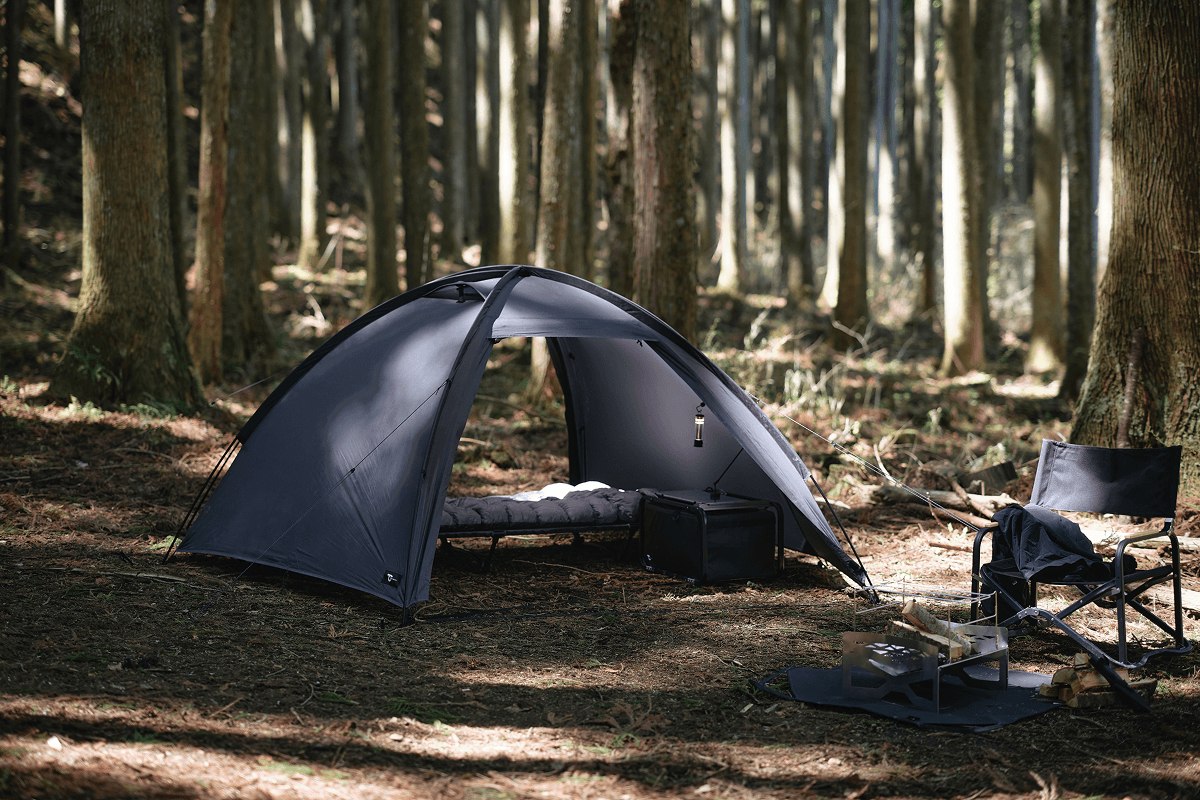
Diafort Light
Solo camping tents often have a reputation for being “low-ceilinged, cramped, and restrictive.”
The "Diafort Light" is a tent ideal for solo camping, consisting of one main pole and two sub-poles, yet it offers enough headroom to stand up and change clothes, as well as a living space with no dead space.
Made from durable, lightweight silnylon, it is approximately 60% lighter than the "Diafort TC Solo Tent," which features the same design but uses TC fabric.
The large front panel can be opened or converted to mesh. The triangular section at the rear bottom can also be converted to mesh, so opening both the front and rear sections provides excellent ventilation.
It can be pitched in various ways, allowing you to enjoy changing its shape depending on the weather, season, or your mood. Another appealing feature is that it packs down compactly for easy transport.
Diafort Solo Tent
The "Diafort TC Solo Tent" features a unique form that combines the best of a tarp and a pop-up tent.
This solo tent allows for flexible configuration and shares a basic design nearly identical to the Diafort Light.
It offers a sense of openness while still ensuring a private space, and since there is no wasted space in the living area, you can spend your time comfortably. Additionally, using mesh for the front and back provides excellent ventilation. Thanks to its simple design, you should be able to set it up on your own.
Montope
The "Montope" is a two-person tent featuring large windows on the front, sides, and ceiling, creating a sense of openness.
On sunny days, you can enjoy gazing at the blue sky or starlit night sky through the skylight, making it a great choice for relaxing solo camping trips.
The interior is rectangular, eliminating dead space and providing a spacious feel.
When fully open, ventilation is excellent; when fully closed, the interior becomes pitch black, allowing you to sleep soundly.
It comes with a roll-up skirt to keep out rain and cold air.
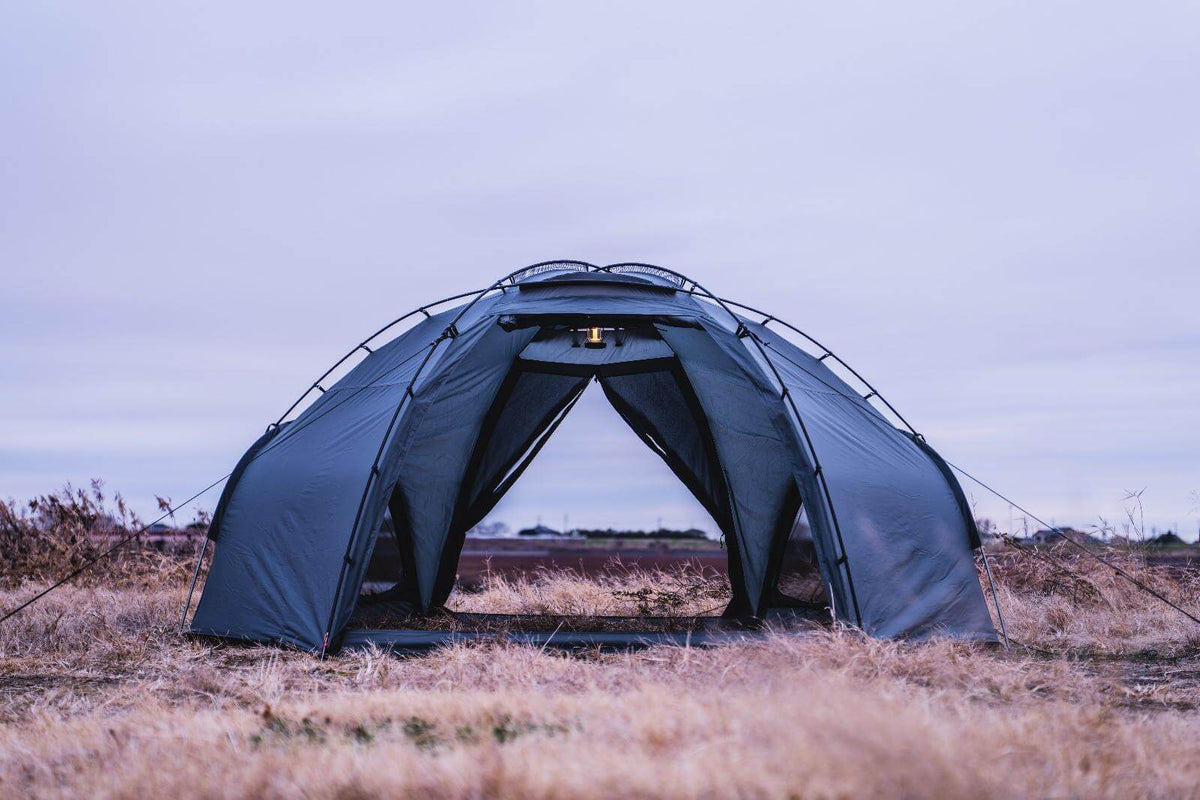
Tenbi Shelter
True to its development theme of "maximum livability with minimal components," the "Tenbi Shelter" is a tent that is easy to handle and offers high livability.
Its unique shape might make setup look difficult, but the poles are color-coded, so even beginners can set it up without getting confused.
The tent features a roll-up skirt at the bottom and mesh windows on all sides, providing excellent ventilation and helping to prevent condensation in the winter.
Since the front is higher than the rear, using the back as a storage area allows for a spacious interior. It’s large enough for a family of four to stay comfortably.
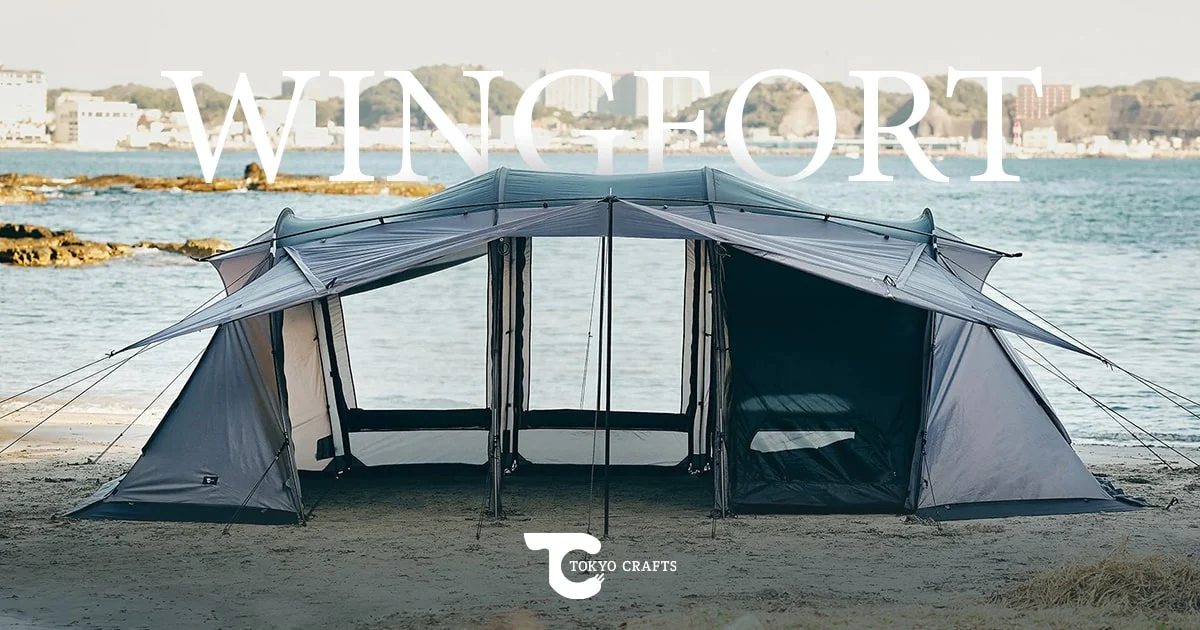
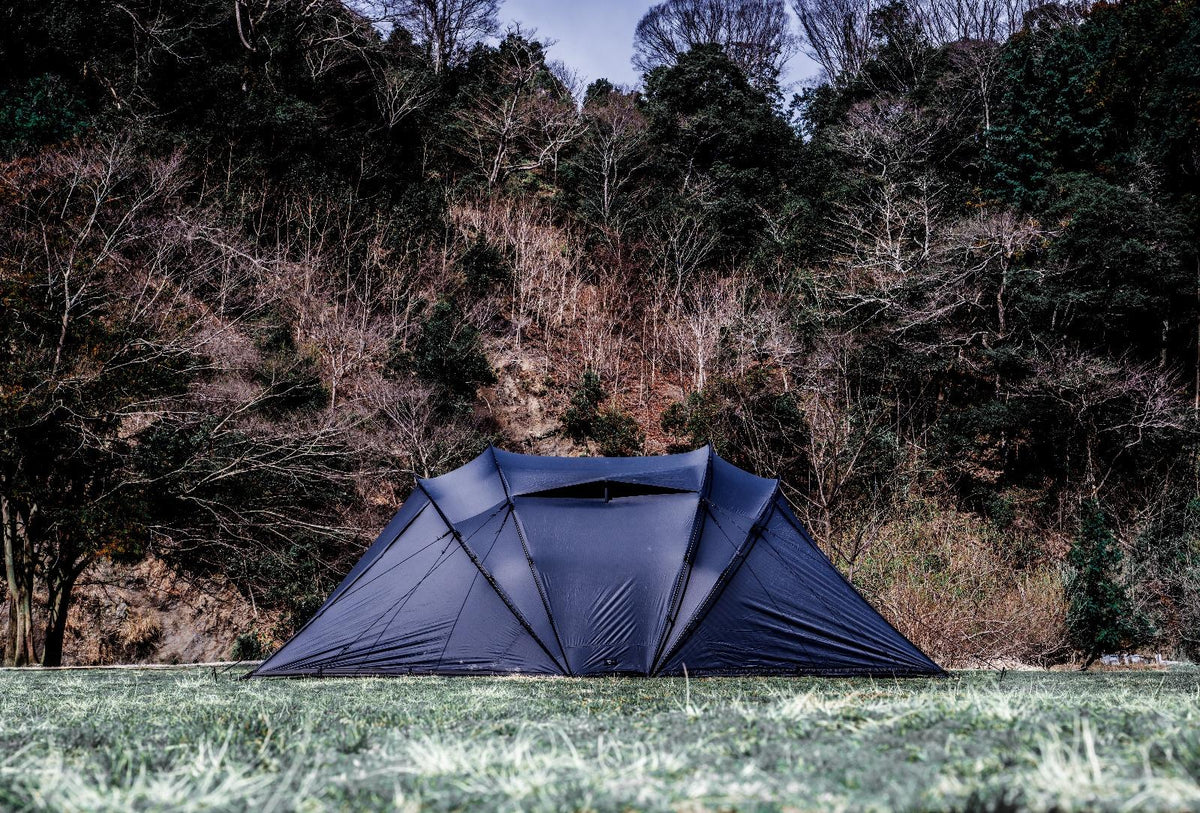
Wing Fort
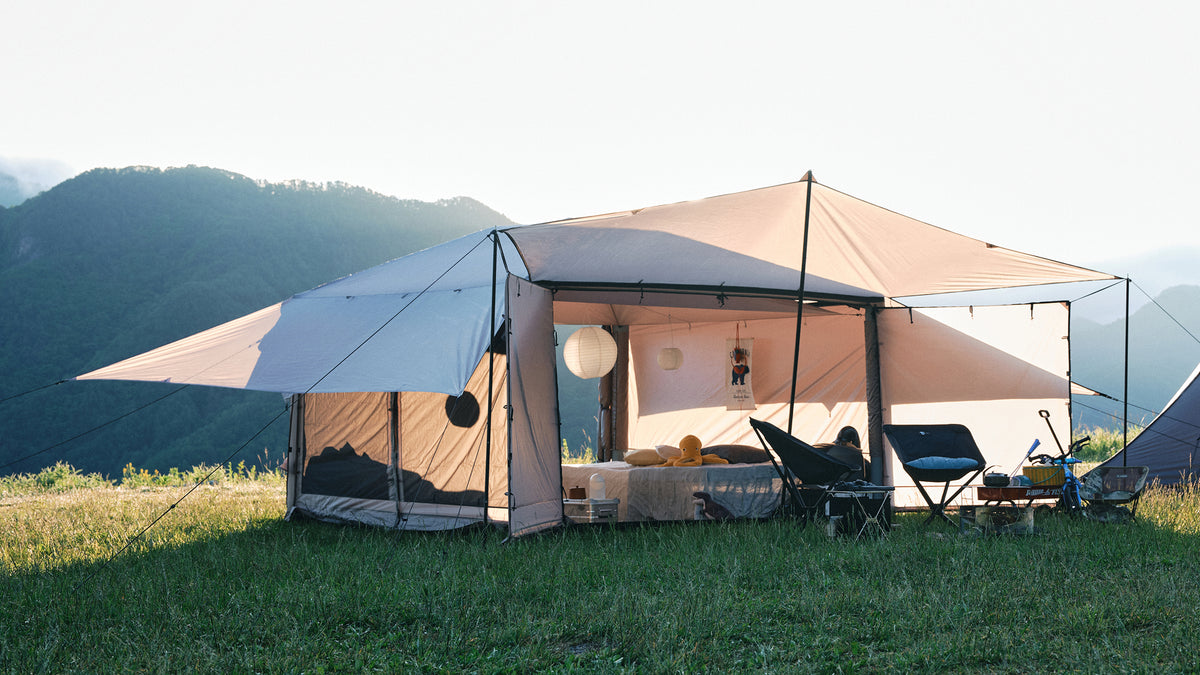
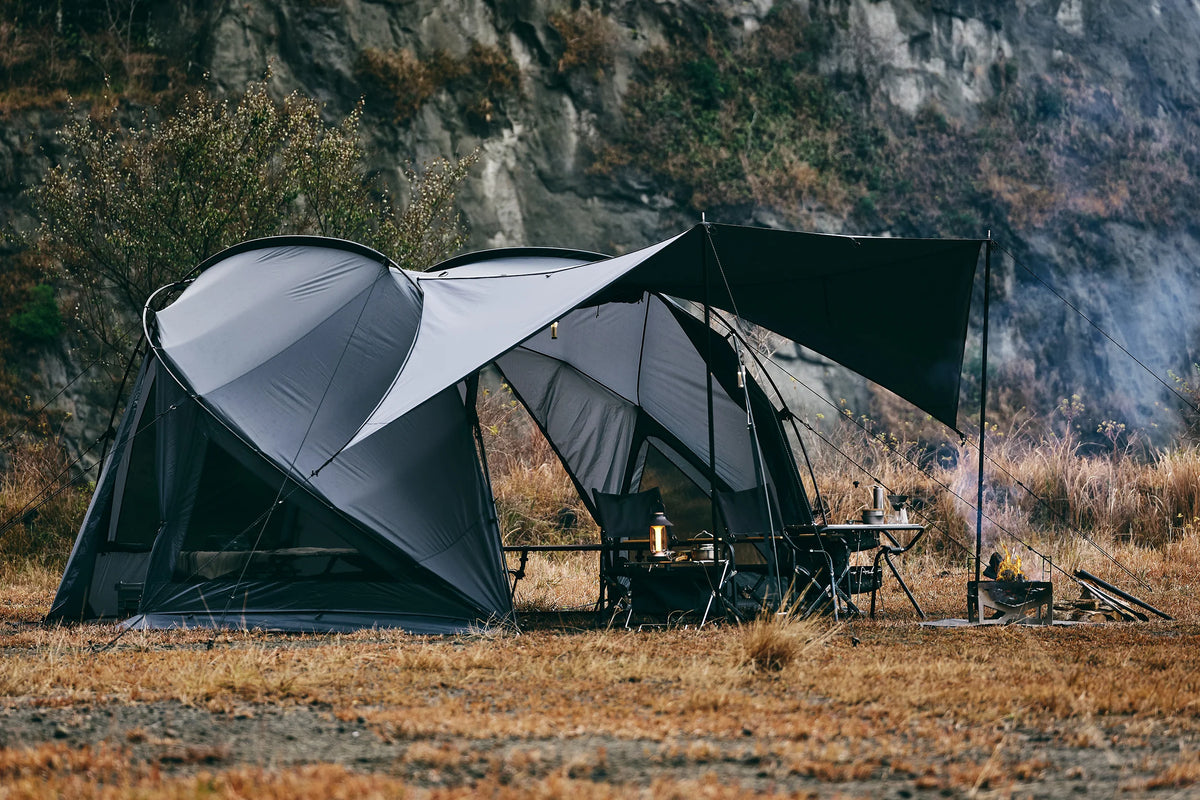
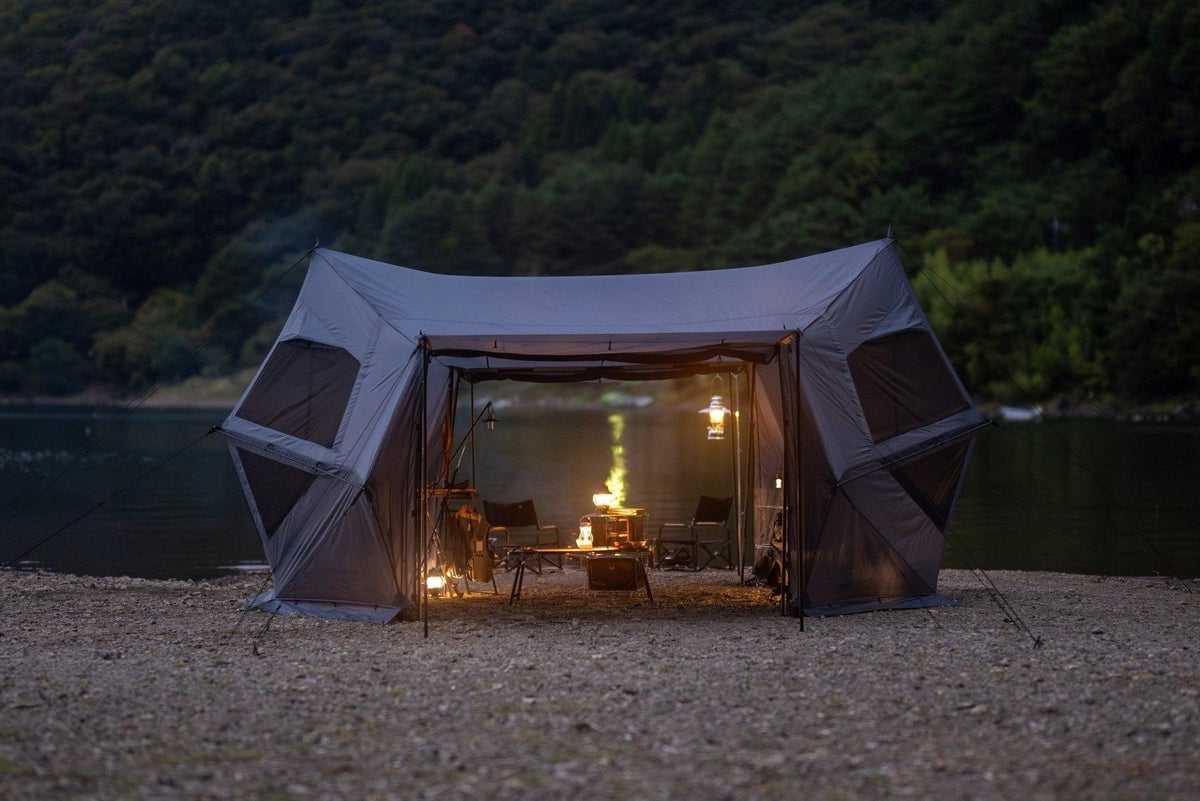
The Wing Fort is a shelter tent that combines the best features of both two-room tents and dome tents, offering flexibility for all seasons, various weather conditions, and different locations.
By flipping up the waterproof panels, you can switch the interior between fully closed, fully open, and mesh modes, allowing you to adjust the configuration according to the weather.
It features a roll-up skirt for excellent ventilation, and since it’s made of water-resistant material, you can rest assured even on rainy days.
By removing the inner tent, it can be used as a shelter for up to 10 people.
Despite its large size, it comes with a storage case that holds all the poles and the tent together, making it easy to carry.
Choose the lightweight tent that’s right for you and enjoy camping!
While we generally refer to them as "lightweight tents," the optimal type varies depending on your purpose—whether it’s for serious backpacking or use at a standard campsite.
Be sure to identify the features you want beyond just "lightweight" and choose a model that perfectly matches your camping style.
RANKING
ランキング一覧へ
ポイント10%ポイント15% ポイント10%ポイント15%
 ポイント10%ポイント15%
 ポイント10%ポイント15%
 ポイント10%ポイント15%
 ポイント10%ポイント15%
ポイント10%ポイント15%
ポイント10%ポイント15% ポイント10%ポイント15%
 ポイント10%ポイント15%
ポイント10%ポイント15%
ポイント10%ポイント15% ポイント10%ポイント15%
ポイント10%ポイント15%
ポイント10%ポイント15%
ポイント10%ポイント15%
ポイント10%ポイント15% ポイント10%ポイント15%
 ポイント10%ポイント15%
 ポイント10%ポイント15%
ポイント10%ポイント15%
ポイント10%ポイント15%
ポイント10%ポイント15%
ポイント10%ポイント15%
ポイント10%ポイント15%
ポイント10%ポイント15%
ポイント10%ポイント15%
ポイント10%ポイント15%
ポイント10%ポイント15%
ポイント10%ポイント15% ポイント10%ポイント15%
ポイント10%ポイント15%
ポイント10%ポイント15%
ポイント10%ポイント15%
ポイント10%ポイント15%
ポイント10%ポイント15%
ポイント10%ポイント15%
ポイント10%ポイント15%
ポイント10%ポイント15%
ポイント10%ポイント15%
ポイント10%ポイント15%
ポイント10%ポイント15%
ポイント10%ポイント15%
 ポイント10%ポイント15%
 ポイント10%ポイント15%
ポイント10%ポイント15%
ポイント10%ポイント15% ポイント10%ポイント15%
 ポイント10%ポイント15%
 ポイント10%ポイント15%
ポイント10%ポイント15%
ポイント10%ポイント15% ポイント10%ポイント15%
 ポイント10%ポイント15%
 ポイント10%ポイント15%
 ポイント10%ポイント15%
 ポイント10%ポイント15%
 ポイント10%ポイント15%
SEE MORE (その他オススメ商品)
ポイント10%ポイント15% ポイント10%ポイント15%
 ポイント10%ポイント15%